Greetings from a basement out in central Minnesota. I hope this missive finds you all feeling hearty and hale, or in the event you’ve been feeling poorly, that you’re on the mend soon. We’re in the thick of the early days of assessment season at work, which means busy days, moving between sites, meeting with various groups, making sure the necessary assessments and supports are in place and are in place for the subsequent weeks.
Throughout the days, my mind occasionally wanders as one’s mind tends to do during the in-between times. You know those times, don’t you? You’ve completed one task, but haven’t started the next, so your brain chews on all the information it’s just ingested, and while it’s working its jaws around that, it remembers past informational—content meals—and decides it wants to sample that instead. And then it just tucks in. Recently, “the vittles of choice” is Peter Jackson’s The Lord of the Rings: The Two Towers (Extended Edition) which my daughter and I saw for her birthday.
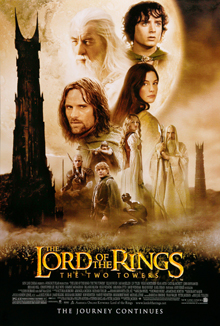
The entire trilogy is back in theaters, with Fellowship of the Ring playing on Friday evenings, Two Towers for a Saturday matinee, and Return of the King bringing it on home on Sunday afternoons. While Fellowship has been and will always be my favorite of Jackson’s films, my daughter’s go-to is Two Towers because there’s quite a bit of Gimli (her favorite character), the battle of Helm’s Deep, and Samwise Gamgee’s response to Gollum’s inquiry about taters, “Po-Tay-Toes! Boil ‘em, mash ‘em, stick ‘em in a stew!” We bundled up, braved the subzero temperatures, stocked up on candy from the Dollar Tree’s surprisingly large selection, and settled in for the nigh on four hour cinematic endeavor. And I’ve been thinking about it ever since.
That’s the power of good storytelling, right? Both the source material, penned by Papa Tolkien, that mad professor, and the adaptation, successfully carried to the big screen by Peter Jackson, hang with you, latch on to your heart and mind, desperate hitchhikers burning to share their chorus of truth. It’s difficult afloat in the tumult of the world not to see it, not to hear these truths, these CAPITAL T, echoes of Eden.
Let’s begin with Frodo and Sam, the ring-bearer and his gardener-friend, and their daily march toward Mt. Doom. The salvation of Middle Earth rests on their backs. They are doing the difficult, tedious labor on a daily basis, quite literally step by step. Isn’t this what we are called to do every day? The regular tasks, one step at a time, in service of something much larger than ourselves. Were we to turn away from what we are called to do, to pack it in for our own Shire, our families, our neighbors, our communities may stumble/perish.
What about Grima Wormtongue (played so so well by Brad Dourif)? Who would trust someone with a surname like that? Might as well call him Liar McLiarface. We meet him in the film already well-ensconced as an advisor to King Theoden, ruler of the Horse Lords of Rohan. He’s been poisoning Theoden’s mind, getting him to question what he knows to be true and what his senses can verify. Confronted with evidence of Saruman’s treachery (a white hand painted on an orc helmet), Grima shifts tactics, obfuscates, drawing attention to the truth and the problem right in front of King Theoden. While this takes place in the fantasy realm of Middle Earth, we see the same thing play out in our daily lives. In the world at large, we witness certain events take place and we’re given a narrative that what we witnessed didn’t really happen the way we saw it. On a personal level, we all have a Grim Wormtongue skulking about our heads, feeding us lies about ourselves.
Similarly, there is a scene in Two Towers in which Saruman gathers the men of the mountains and incites them to attack the people of Rohan, explaining that it’s Rohan’s fault that the men of the mountain are in the situation they are in. We also see Saruman destroying the trees of the forest in the name of progress to feed his war machine. I’m not certain Tolkien/Jackson was necessarily trying to send an environmental message here, but I do see this as not just being neglectful of stewardship but actually turning away from it.
The film deals heavily in despair, but it also deals in hope. For every scene of forlorn darkness and doubt, there is always an answer of light. When Helm’s Deep has been overrun and the people of Rohan have been driven back to the keep, King Theoden has given up. He asks Aragorn, “How do men stand against such reckless hatred?”
“Ride out with me,” Aragorn replies, and then we hear an echo of Gandalf’s parting words before he goes off on his side mission to get the riders of Rohan back, “Look to the east on the fifth day.” This is all about remembering and believing in promises. For me, this speaks to Christ’s promise to return.
Toward the end ofThe Two Towers, Sam delivers this amazing monologue imbued with the message of hope, and why it’s important to keep pressing forward, to keep trying even when it seems like all is lost. He tells Frodo, “There’s still some good in this world, and it’s worth fighting for.” And this is one of the key ideas to keep in mind in the face of despair and doom we may see permeating our communities. There is good in the world, so we must shine our lights. We must be beacons of hope, and we must point back to Him, who is our greatest hope, the conqueror of death.
There are other moments in the film I could write about, but I best close for now. If you get the chance, try to catch one or all of these flicks while they’re still playing in theaters. Be well, my friends. Take care of yourselves and each other. Ride out and be the light.




 Purdy Good
Say something, if you like